

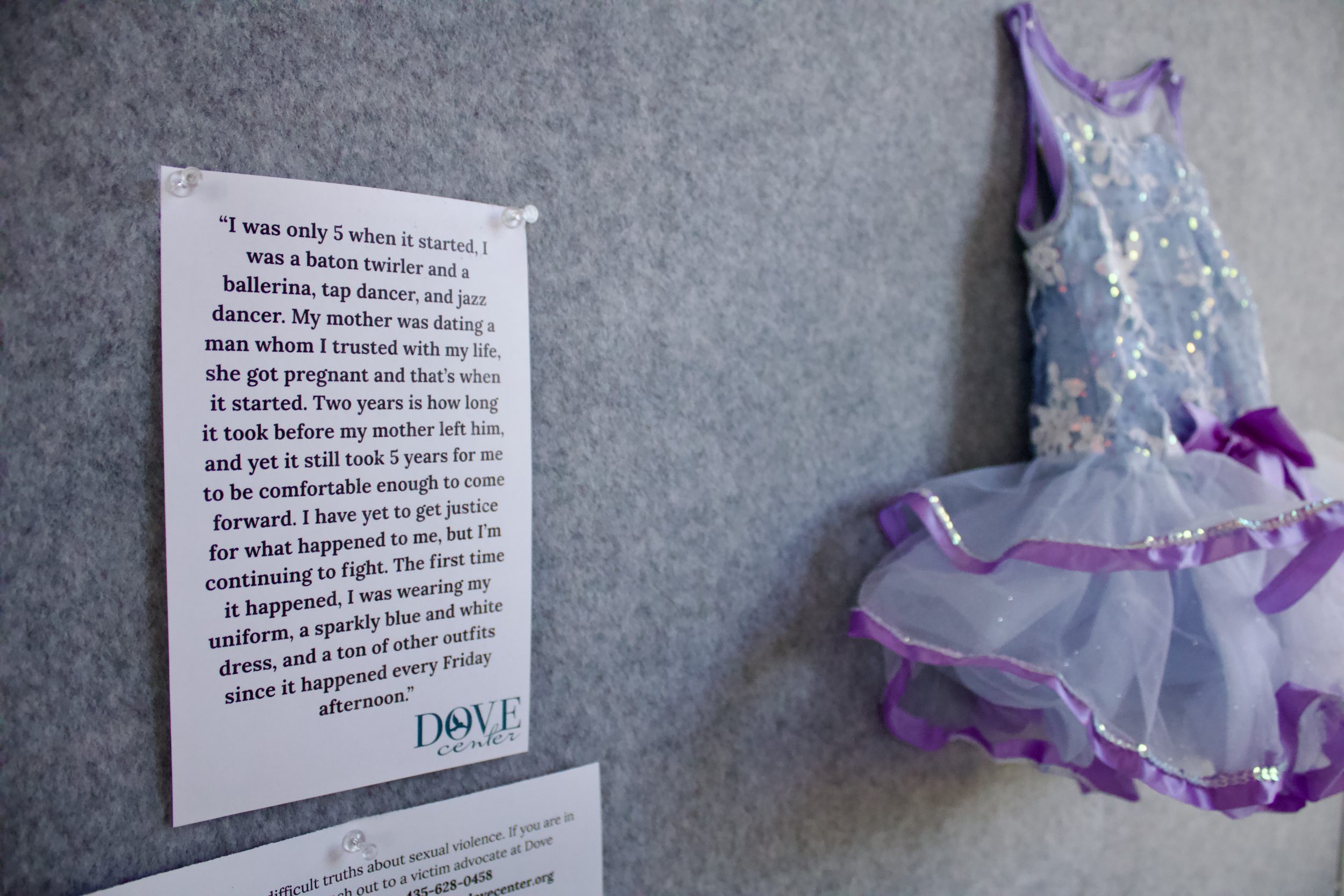
To raise awareness during Sexual Assault Awareness Month, the DOVE Center is hosting the “What Were You Wearing?” exhibit at the Holland Centennial Commons Library lobby.
“The exhibit is a showcase of outfits survivors were wearing at the time of their assault,” said Meghan Nisson, an advocate at the DOVE Center.
The DOVE Center is a nonprofit organization that provides several services for the community. They aim to inform people about domestic abuse and sexual violence.
The center provides services to support the community with immediate and long-term needs, including:
- Shelters
- Counseling
- Court advocacy
- Case management
- Financial help
The exhibit aims to challenge common misconceptions about sexual assault, particularly the idea that a victim’s clothing contributes to an assault.
“This year, we were also able to display letters of support to survivors that were written during last year’s exhibit,” Nisson said. “These letters are to help show everyone that’s experienced violence that there’s a community of people that believe them and want to support them.”
Some students gained perspective exploring the exhibit.
“I think this exhibit is a good way to give victims a voice,” said McKaydee Lindwall, a sophomore general studies student from Riverton. “It allows people who have been in this situation to not be alone.”
“Seeing the different outfits and stories made me realize that it can happen to anyone, anywhere,” said Kylie Webster, a sophomore English major from Menifee, California. “Seeing the outfits that look like something I would wear really put things into perspective for me.”
To plan the current exhibit, the DOVE Center collected the previous year’s stories through a QR code set up at the exhibit.
“This is a powerful message that deserves to be shared, in hopes to challenge people’s ideas around sexual assault and shows it can happen to anyone, no matter what they were wearing,” said DOVE advocate, Angelina Rondinelli.
“The exhibit shows it was never about the clothes, but about the motive,” Lindwall said.
The center obtains the recreated outfits from local thrift stores and works closely with the Student Resource Center to coordinate the exhibit, Nisson said.
“There is a lot of stigma that causes survivors to feel shameful and fearful, therefore preventing them from ever sharing their story or reporting to law enforcement,” Nisson said. “I hope that by challenging these stigmas and putting the blame back on abusers, that we are helping to create a safer community where survivors know that they are going to be heard, believed and helped.”
Nisson said she hopes visitors become a safe person for others to confide in without fear of judgment after visiting the exhibit.
The DOVE Center also has advocates who respond to local hospitals and clinics to help survivors get forensic exams completed, along with helping clients make police reports, Rondinelli said.
“When your loved ones tell you that they’ve experienced violence, believe them and take it seriously, then refer them to our hotline,” Nisson said.
The DOVE Center’s hotline number is 435-628-0458.
Students can stay updated with the center by following them on Instagram, @dovecenter, or visiting the website for volunteer opportunities and donation information.