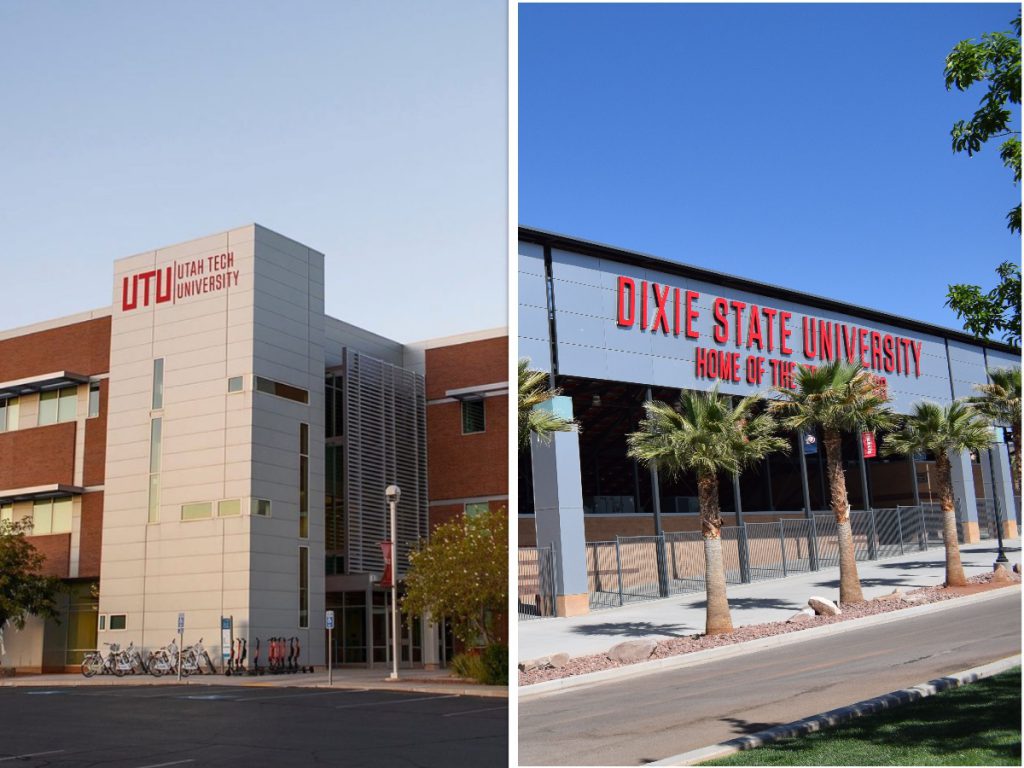

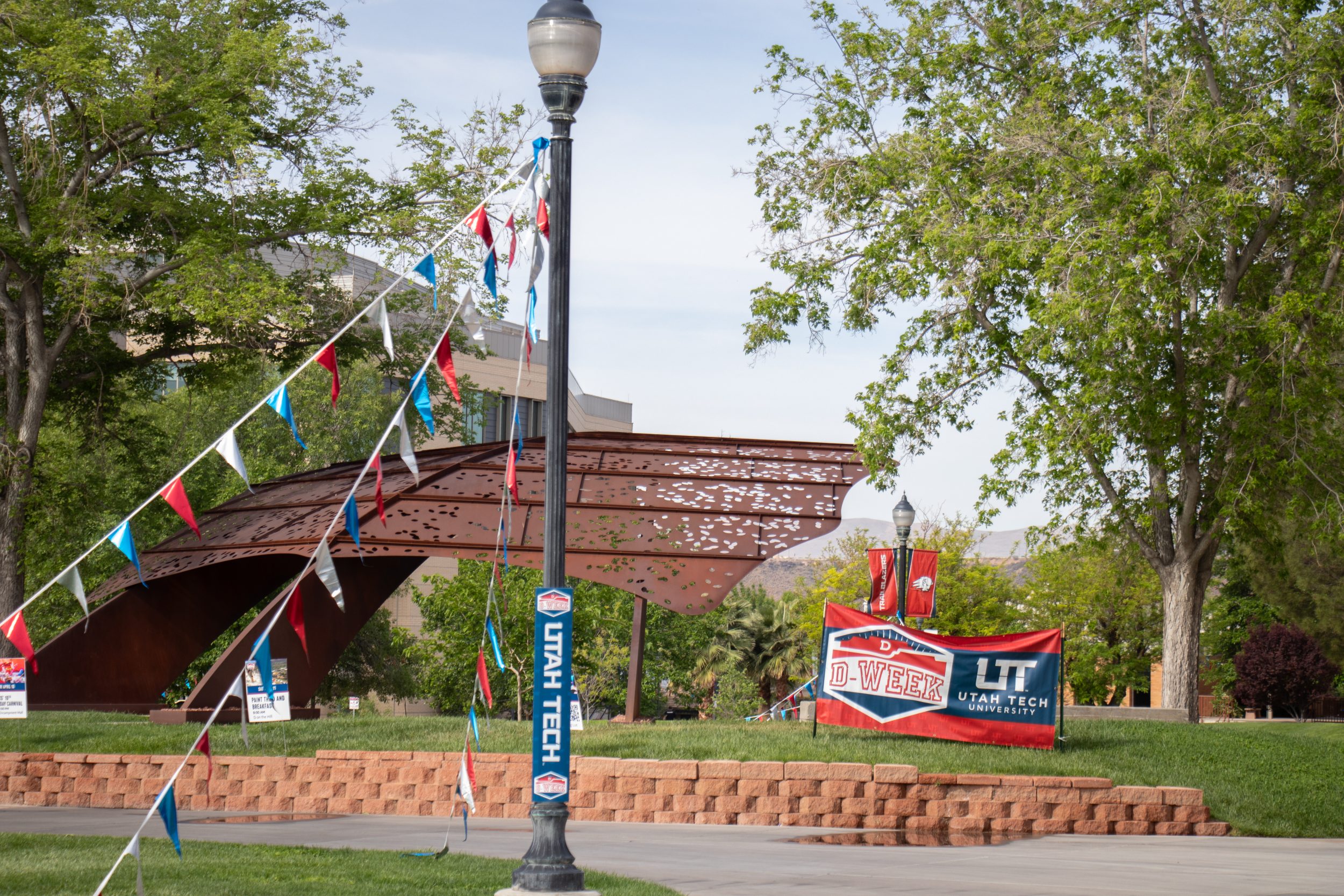
Utah Tech University changed its name to move forward. But each spring, one of the university’s most celebrated traditions still reflects the past it tried to leave behind.
I have always enjoyed the events I have attended at Utah Tech. However, when it comes to traditional events such as D-Week, I find myself questioning whether changing the university’s name really mattered if we are still holding onto the same language tied to that history.
Traditions
Many traditions at the university are built around fun activities that bring the community together. Events like Live and Local give students a spotlight to showcase their talents to a wide audience. Trailblazer Queen is another event where participants step on stage and perform in front of a large crowd.
Those moments are inspiring. It takes courage to put yourself out there for everyone to see.
More importantly, these events bring people together. Students meet new people, the community shows up to support them, and everyone gets to experience traditions that many before us have enjoyed.
There are 45 events during D-Week, and students who attend all of them receive a special medallion at graduation. Parents’ Day also takes place during the week, giving families the opportunity to see what their students experience on campus.
These traditions are also worth the investment the university puts into them. Many of the events highlight student talents and give people opportunities they may not otherwise have to perform, compete or showcase their abilities. These events help create experiences that students remember for a long time.
Now that I’m in my third year at the university, I can say the largest turnouts I’ve seen for campus events have been during D-Week. Students and community members genuinely care about showing up and participating in something happening right here at their university and city.
But if these events are what truly matter, then why are we still calling it D-Week?
History
The name D-Week came from the university’s former name, Dixie State University. The celebration was created to honor the school’s heritage while strengthening the partnership between the university and the surrounding community.
When the university changed its name to Utah Tech, part of the agreement allowed the campus to still be referred to as the Dixie Campus. This decision was meant to preserve traditions that have existed for decades.
However, the university had significant reasons for removing the Dixie name.
Twenty-two percent of graduates surveyed in 2021 said that when applying for jobs outside of Utah, employers questioned why “Dixie” appeared on their resumes.
In the university’s recruiting region, 42% of respondents said the school’s name impacted their interest in attending. Some even believed the university was located in the American South because of the name.
For students attending the university today, the reality is that very little has changed beyond the official name. The same traditions and events still exist.
Which raises the question: If the traditions are what people care about most, why not update the name of the week itself?
Moving forward
Traditions are worth keeping, especially when they build community and highlight students’ talents. The events themselves are not the problem.
But if the university made the decision to leave the Dixie name behind, continuing to use D-Week feels like holding onto the past in a different form.
Some say the term “Dixie” remains tied to southern Utah’s pioneer heritage and values like camaraderie, grit, sacrifice and service, so it is still used for community-centered initiatives.
A simple name change would not take away the traditions people enjoy. The events, the community and the memories would still remain. If we wanted to move forward as an institution, a simple change to calling it UT-Week would suffice. It keeps the traditions there, while still incorporating the university within the name.
If the goal is to move forward and make everyone feel welcome, then the university should fully commit to that change.