

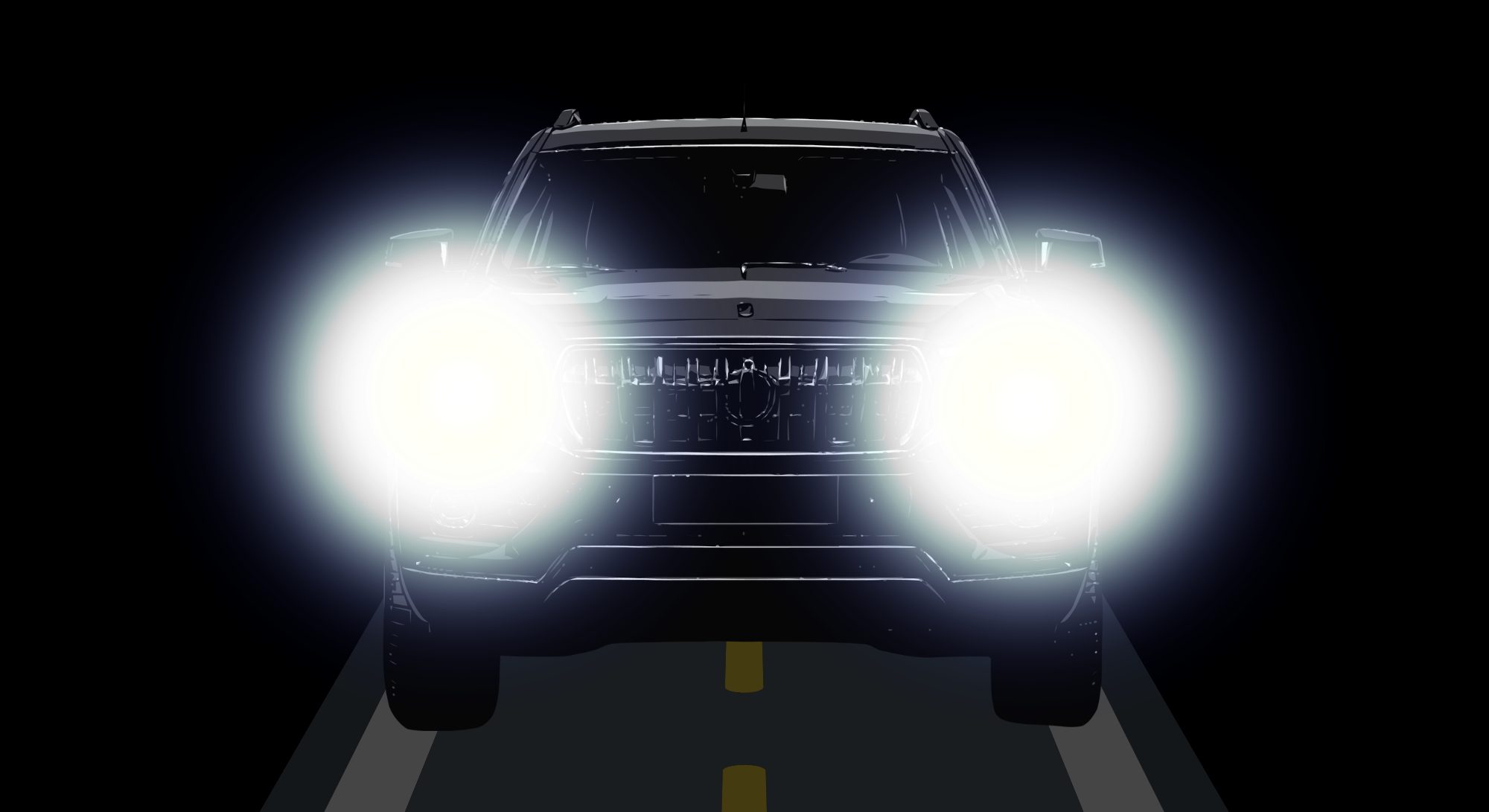
A recent survey by the AAA found that drivers are increasingly concerned about LED headlights and their impact on road safety.
In the survey, six out of 10 drivers said headlight glare is a problem while driving at night, and some have said the issue has worsened over time. Nearly 73% of respondents said glare has become more severe over the past decade.
A report by the Governors Highway Safety Association found that there has been an increase in pedestrian deaths alongside the rise in LED headlight use since 2010 nationally. The report showed a 4,215 difference between daylight deaths and nighttime deaths. LED headlights that are factory-installed in vehicles are legal under current federal safety standards.
LED lights, which emit a bright white light, have become more standard in many modern vehicles. Older vehicles used halogen headlights, which produce a dimmer, yellow-toned light.
According to AAA, 92% of the headlight glare comes from oncoming traffic, while 8% is caused by reflections in rearview and side mirrors. The survey also found that women were 13% more likely than men to report glare as a problem.
“I fear driving on the road at night,” said Larissa Thomas, a sophomore general studies major from Spanish Fork. “Not only am I scared of drivers, but I am more fearful when I can’t see from oncoming traffic.”
AAA also reported that headlight glare can be challenging for drivers who wear glasses or have vision conditions.
“As a driver in St. George with an astigmatism, the LED light has definitely caused me issues,” said Natali Fluhman, a junior English major from Lubbock, Texas. “Sometimes, it is hard to determine where the lane lines are because of headlights.”
The survey found that 41% of pickup truck drivers reported concern about glare, while 59% of concerned drivers were in sedans. As more vehicles are manufactured with LED headlights, many trucks and SUVs already come equipped with them.
“I specifically struggle when there is a lifted truck behind me because I have a smaller car,” said Sofia Cuara, a Utah Tech graduate from St. George.
Glare not only affects visibility in the moment but can also cause lingering vision problems, such as temporary spots or reduced clarity after exposure.
Cuara and Fluhman said they would like to see a return to halogen lights.
“Sometimes I purposely slow down when there is a truck with blinding headlights behind me,” said Jesse Ham, a sophomore recreation and sport management major from Murrieta, California. “You could tell me it was daytime and I would believe it.”
AAA reported that age does not significantly affect the likelihood of reporting headlight glare as an issue.
To improve nighttime safety, AAA recommends:
- Avoid looking directly into headlights
- Get your headlights professionally inspected
- Ensure your headlights are fully clean and operational