

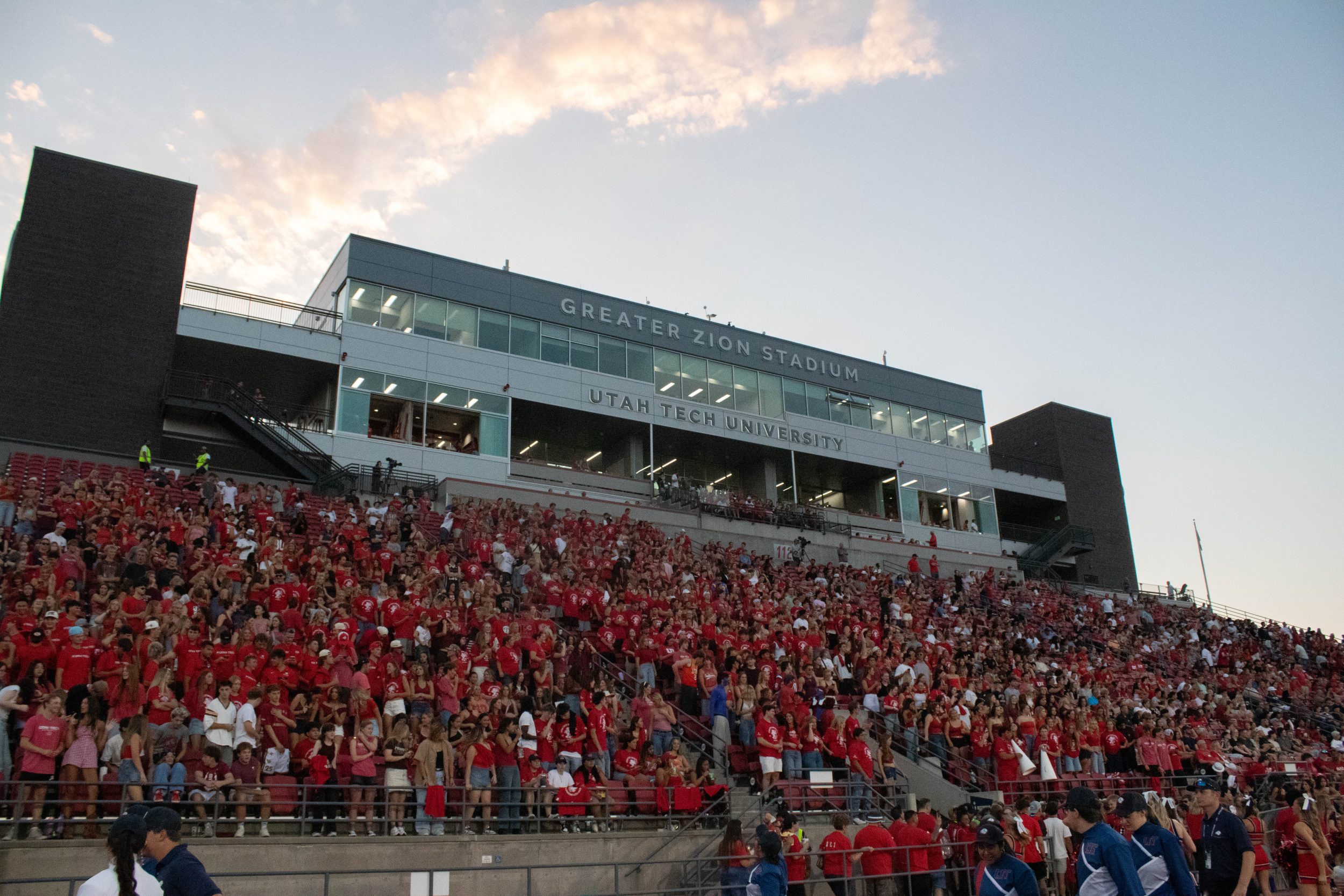
While open enrollment may weaken students’ long-term commitment to Utah Tech University, it ultimately allows for a more diverse and cohesive campus.
Utah Tech is an open enrollment university, which allows nearly all students to get accepted and go to school here. This is in contrast to other universities, which require set test scores, grades and other qualities in order to be accepted.
Open enrollment provides an opportunity for all students to receive a college education at an affordable rate relative to other colleges. Utah Tech is the most affordable university in Utah, which allows a wide range of students to come here.
This, however, does have its downsides. I have seen that students don’t always take school seriously, and that is partially due to the fact that the school doesn’t have any requirements to attend school.
In many of my general education classes, I have had classmates who were there only because going to college was the “thing to do.” Students who did not make school a priority in high school are able to come here without having to change many of their bad habits.
This is seen in both the graduation rates and the retention rates here. The graduation rate is around 36%, which is one of the lowest rates in the state, while the retention rate is approximately 65%.
Not only does this negatively impact the classroom experience for students who are taking school seriously, but it also hurts the community on campus. I’ve seen this during group projects when students who take the work seriously are paired with students who couldn’t care less if the project gets done.
If students are not staying here long enough to graduate or are leaving after their first year, it does not allow for students to build an attachment to campus. This hurts school spirit overall, which then impacts student support at campus events like athletics.
As the sports editor for Sun News Daily for the past two years, I have covered nearly every home football game. I have been able to see the lack of student support at times for the teams on campus. Athletes receiving support from the rest of the campus largely depends on their success.
While winning is important, it also shows that students are connected to the school in the same way that students are to other schools. For example, the University of Utah’s football team has a 94-game sellout streak, and Brigham Young University had five sellouts last season.
Open enrollment isn’t entirely to blame, but it does weaken students’ attachment to the school and causes them to not support athletics and other programs as strongly as in other schools.
On the other hand, open enrollment provides opportunities for students that are not as easily available at other schools.
Affordable schooling allows people to find ways to align their interests with employment opportunities in college. For example, I was able to take additional law classes through the criminal justice program after taking a media law and ethics class as part of my digital media major.
This allowed me to see how I could align my interests in digital media and law, as I am now preparing for law school this fall.
Open enrollment also allows for students from various backgrounds and places to go here without as big a financial hurdle. While this may not ensure the school spirit is as strong compared to other schools, it allows for a wide variety of opinions and backgrounds to be represented on campus.
Part of the reason why I chose to come here despite having opportunities to stay closer to home in Idaho was the affordability and the learning opportunities provided here at Utah Tech. While this is not entirely due to open enrollment, it plays a part in helping students see the opportunities provided here.
Open enrollment does diminish school spirit when students take advantage of the school’s affordability to not take school or campus as seriously. For those who use it to try new things and get involved, it allows them to learn new skills and meet new people they otherwise might not have met.