
In order to protect the integrity of college sports, the current NCAA rules must be adjusted to benefit both athletes and universities.
Right now, current NCAA transfer rules allow athletes to transfer as often as they want while still being able to play immediately at their new school. Prior to the change in 2024, athletes were only able to transfer once and immediately play at their new school. Other than that one-time exception, athletes had to sit out a year before they were eligible to play.
Along with the recent changes in transfer rules, the introduction of NIL in 2021 has also heavily contributed to the rise in transfers. NIL allows athletes to profit off their name, image and likeness. University of Miami quarterback Carson Beck transferred from the University of Georgia after receiving an NIL offer for $4-6 million.
With the current transfer and NIL rules, college sports are gradually being destroyed and turned into professional sports. It is also impacting the continuity that teams can have from season to season.
As transfers have continued to rise in recent years, the NCAA attempted to halt this by cutting the number of portals throughout the year from two to one. The portal for college football ran from Jan. 2-16.
Alongside this change, it is essential that further changes are made to maintain the distinction between sports at the professional and college levels.
With there now being only one transfer portal, it only made the fight to get top transfers more expensive. Top returning quarterbacks received deals ranging from $3-5 million this offseason.
This is destroying the college experience, which used to allow athletes to develop at a single program before and if, they were able to play at the next level.
“And that’s not the players’ fault,” University of Georgia head coach Kirby Smart said in an interview. “It’s not the agents’ fault. It’s not our fault. It’s not anybody’s fault. It’s just, you’ve created a system that inherently rewards what defies a team concept. And in a team sport, it just makes no sense… You tear at the culture of every organization by promoting something that doesn’t exist. It’s almost like it just permeates what society is now, where it’s me, me, me, me, and nothing about the teams. It’s very unfortunate.”
This has essentially turned the transfer portal into free agency, with colleges forced to allocate money for top-ranked recruits.
In the short two-week portal, Oklahoma State University brought in 49 transfers, while Iowa State University had to add more than 40 transfers to rebuild its roster from transfers they had lost.
“Guys are looking to where can I develop value right now and more about what can I get instantly in terms of getting in the portal or going to another school,” former University of Alabama head coach Nick Saban said. “No one talks about the college experience anymore. Nobody talks about graduation. All these things are probably important to the future.”
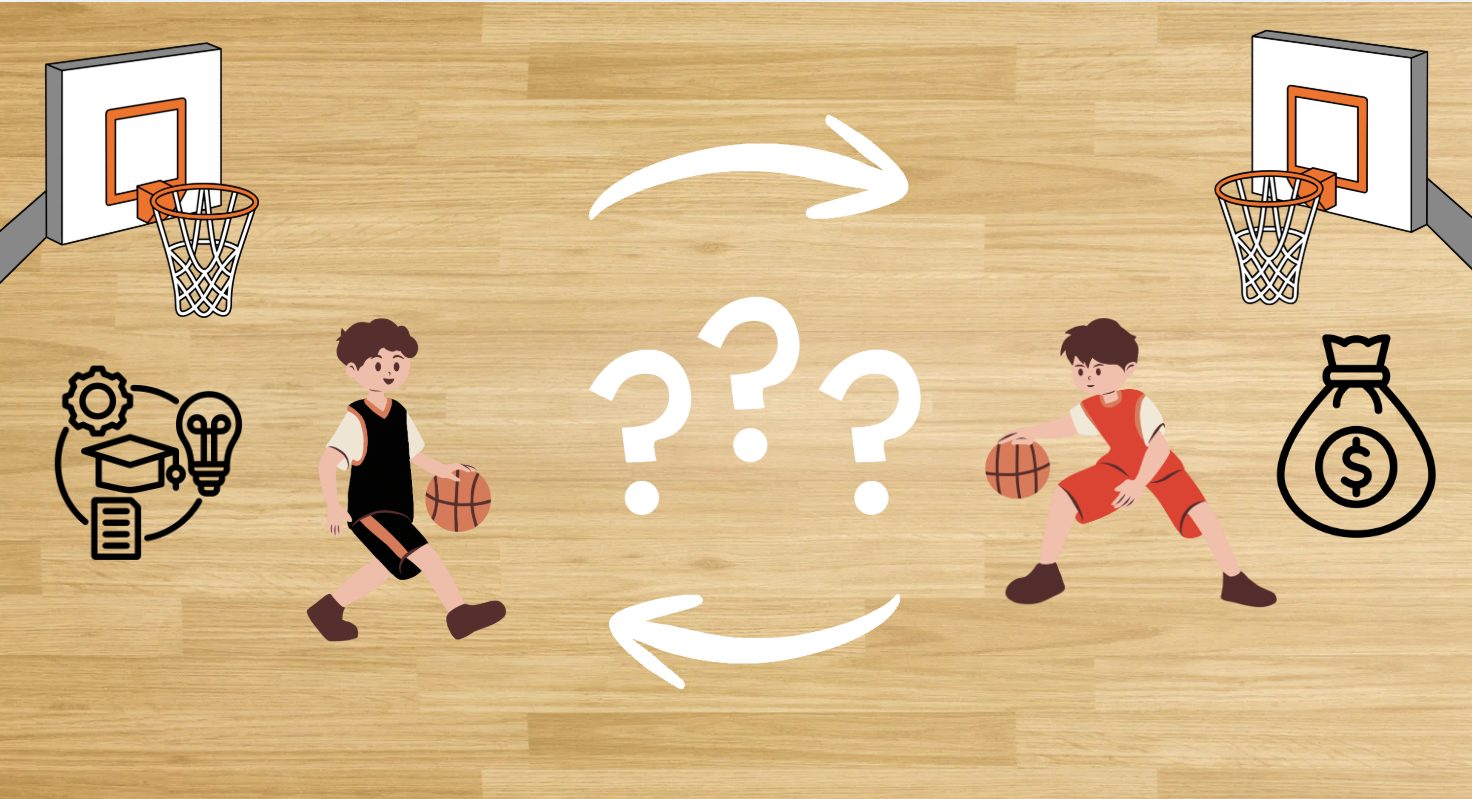
In order to protect the integrity of college sports, adjustments to both the transfer portal and NIL have to be made. Altering both how NIL is used by athletes and adjusting the transfer portal is crucial. There are currently few governing rules that discourage athletes from leaving their current school for the highest bidder.
If the NCAA is not willing to protect the integrity of college sports, then it is only a matter of time before college sports as we know them now are a forgotten thing of the past.