

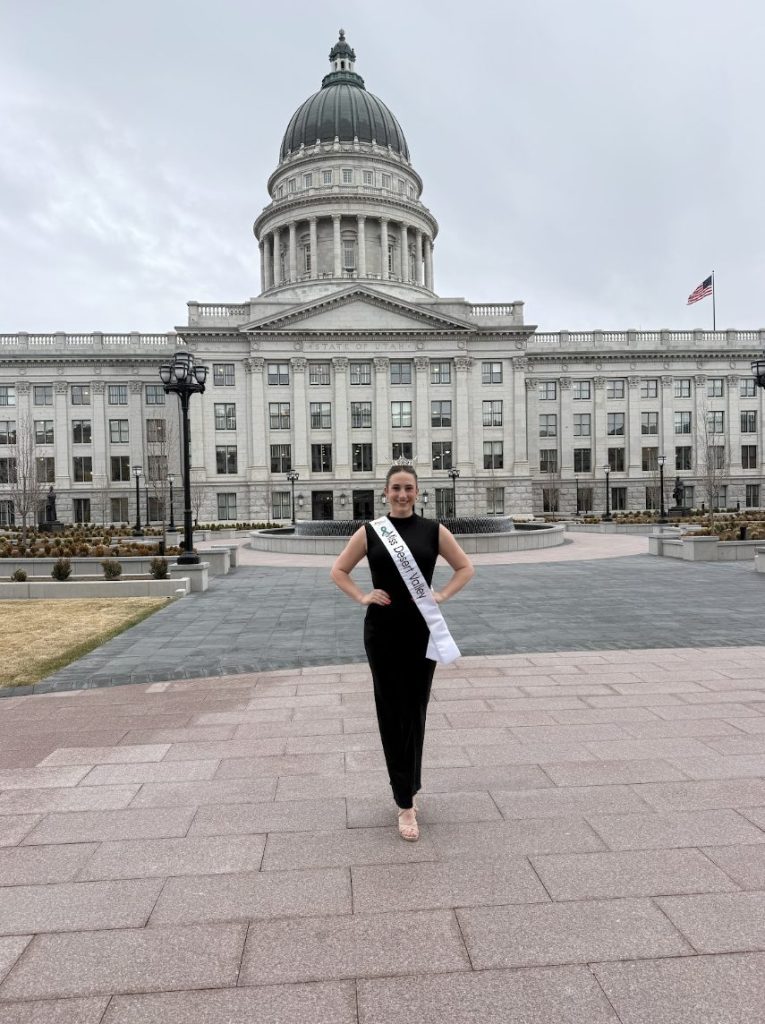
By Brooklyn Kranendonk, a junior marketing major from Eagle Mountain and Miss Desert Valley

Building a culture of consent on college campuses
April marks Sexual Assault Awareness Month (SAAM), a time dedicated to raising awareness, supporting survivors and educating communities on prevention. While these conversations are important year-round, this month provides a meaningful opportunity to spotlight the role each of us plays in creating safer, more respectful environments, especially on college campuses.
College is often a time of growth, independence and new experiences, but it is also a space where conversations about boundaries, communication and consent are critically needed. Through my service initiative, “Know or It’s No,” I aim to emphasize the importance of clear, informed and enthusiastic consent, because anything less is not consent.
What does Sexual Assault Awareness Month represent?
Sexual Assault Awareness Month is more than just a campaign, it is a call to action. It represents a commitment to education, prevention and support for survivors. It is also a reminder that sexual violence is a widespread issue that affects individuals of all backgrounds, many of whom may never share their experiences.
SAAM encourages open dialogue, challenges harmful misconceptions and promotes a culture where survivors are believed, supported and empowered. Most importantly, it reinforces that prevention starts with awareness and education.
Why does consent education matter in college environments?
Consent education is one of the most effective tools we have in preventing sexual violence. Yet, many students arrive on college campuses without a full understanding of what consent truly means.
Consent is not just the absence of a “no.” It is a clear, enthusiastic, and ongoing “yes.” It must be freely given, informed and reversible at any time. Consent cannot exist under pressure, coercion or impairment.
In college settings, where social dynamics, peer pressure and alcohol may be present, understanding these principles becomes even more essential. When students are equipped with accurate, accessible information about consent, they are better able to communicate their boundaries, respect others and intervene when something doesn’t feel right.
Education also helps dismantle harmful myths, such as the idea that consent is implied in certain situations or that it only needs to be established once. By replacing assumptions with clear communication, we create safer and more respectful interactions.
Creating a culture of respect and accountability
Building a culture of consent goes beyond individual actions, it requires a collective commitment. Every student has the ability to contribute to an environment where respect, communication and accountability are the norm.
Here are a few practical ways students can help foster that culture:
- Practice clear communication. Normalize asking for and giving consent in everyday interactions. Open, honest conversations reduce confusion and build trust.
- Respect boundaries immediately. If someone expresses discomfort or says no, that boundary should be honored without question or persuasion.
- Look out for one another. Bystander intervention can make a powerful difference. If a situation feels unsafe or unclear, stepping in, whether directly or by seeking help, can protect others.
- Challenge harmful language or behavior. Jokes, comments or attitudes that minimize consent or excuse harmful behavior contribute to a larger culture of disrespect. Speaking up matters.
- Educate yourself continuously. Consent is not a one-time lesson. Staying informed helps you grow and support others more effectively.
Creating change doesn’t require perfection, it requires intention. Small, consistent actions can shift the culture in meaningful ways.
Campus and local resources
One of the most important things students should know is that they are not alone. Most college campuses offer a variety of resources designed to support students, whether they are seeking help for themselves or supporting a friend.
These resources may include confidential counseling services, campus advocacy centers, Title IX offices and 24/7 hotlines. Many campuses also partner with local organizations that provide crisis support, legal advocacy and medical services. Every person also has access to the statewide hotline at (801-736-4356).
Becoming familiar with these resources before they are needed can make a significant difference. It empowers students to act quickly, access support and guide others to the help they deserve.
Getting involved during April
Sexual Assault Awareness Month offers numerous opportunities for students to engage, learn and make an impact. Campuses often host events such as educational workshops, guest speakers, awareness walks and survivor support initiatives.
Students can get involved by:
- Attending campus events and encouraging friends to join
- Sharing educational content on social media
- Wearing teal to show support
- Volunteering with campus or local organizations
- Participating in discussions that promote understanding and empathy
Even simple actions, like starting a conversation or sharing a resource, can create ripple effects that extend far beyond one month.
Moving forward together
At its core, “Know or It’s No” is about clarity, respect and empowerment. It is about ensuring that every individual feels confident in their ability to communicate boundaries and that those boundaries are honored without hesitation.
Sexual Assault Awareness Month reminds us that change is possible but it requires all of us. By prioritizing education, practicing accountability and supporting one another, we can build campus communities rooted in safety and respect.
Because when it comes to consent, knowing isn’t optional, it’s essential.
Learn more at ucasa.org or on Instagram @knoworitsno.